


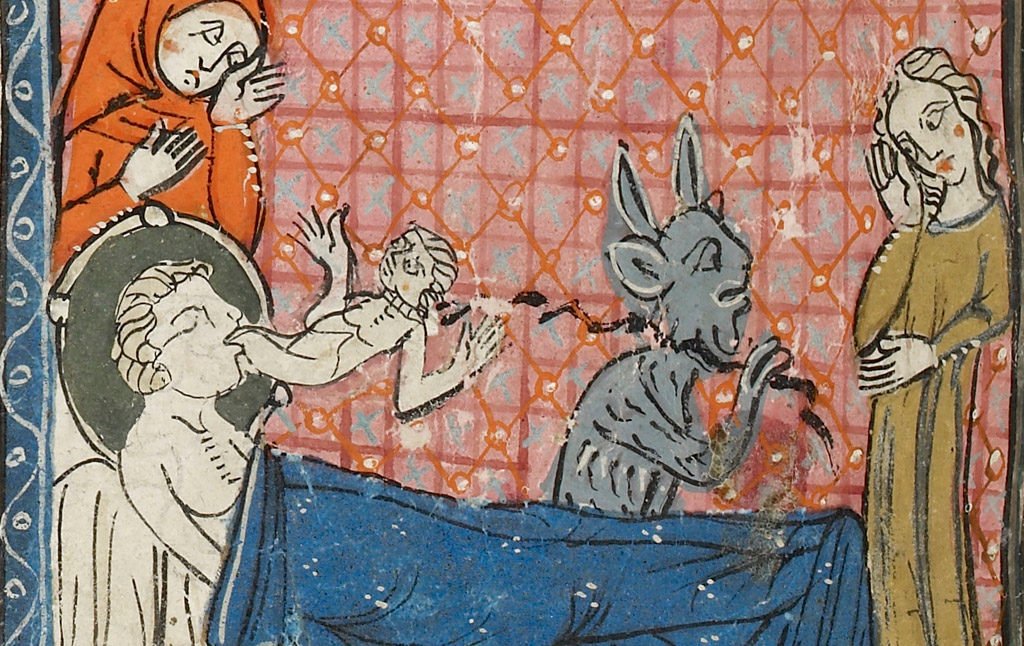

We live in a world with ever greater levels of uncontrolled news. This is partly due, of course, to access to unprecedented levels of information. But it is also linked – among other factors – to forms of mistrust and hostility towards those who are considered to be behind machinations or conspiracies: these groups are targeted either for political and economic reasons, or just because they possess certain types of knowledge. Yet this trend is by no means recent: the correlation between pandemics and the spread of fake news and conspiracy theories was already evident during the Black Death in the mid-14th century.
What is perhaps most surprising is the fact that – then as now – certain individuals or groups, even large groups, believe in news or theories that have no basis whatsoever in fact: they refuse to even consider any form of evidence to the contrary.
But can one really believe in something without evidence or, in the most extreme cases, against all evidence? To what extent are we required to be responsible not only for our actions, but also for our beliefs? And ultimately, is it really in our power to ‘want’ to believe something? Philosophical questions of this kind fall into the domain of what is referred to as ‘the ethics of belief’ – a domain whose genesis is usually traced back to the confrontation, in the late 19th century, between Clifford’s evidentialism and William James’ defence of certain forms of doxastic voluntarism and which still deserves, both from a theoretical and from a historical point of view, an in-depth study. In the first sense, this means taking an innovative stance on open questions such as: the possibility of voluntarily believing in something; the more or less restricted (or reductionist) way of understanding the requirements of evidentialism; and the value of testimony as a non-negligible foundation for the acceptance of certain truths. In the second sense, the aim is nothing less than to write something we lack: a comprehensive history of the ethics of belief, starting from Augustine of Hippo’s first significant reflections on the epistemic and moral value of beliefs, and tracing the debates on evidentialism and doxastic voluntarism in medieval and modern thought up to Kant. BELIEVIDENCE is thus, to its core, interdisciplinary and cross-chronological. Its basic methodological assumption is that we should not seek a linear continuity between past and present. Rather, we need the exact opposite. Only an accurate, philological examination of the differences and discontinuities between past and present will offer fresh and less obvious perspectives for interpreting current phenomena.

Maria Evelina Malgieri
mariaevelina.malgieri@unito.it
Matteo Di Giovanni
We live in a world with ever greater levels of uncontrolled news. This is partly due, of course, to access to unprecedented levels of information. But it is also linked – among other factors – to forms of mistrust and hostility towards those who are considered to be behind machinations or conspiracies: these groups are targeted either for political and economic reasons, or just because they possess certain types of knowledge. Yet this trend is by no means recent: the correlation between pandemics and the spread of fake news and conspiracy theories was already evident during the Black Death in the mid-14th century.
What is perhaps most surprising is the fact that – then as now – certain individuals or groups, even large groups, believe in news or theories that have no basis whatsoever in fact: they refuse to even consider any form of evidence to the contrary.
But can one really believe in something without evidence or, in the most extreme cases, against all evidence? To what extent are we required to be responsible not only for our actions, but also for our beliefs? And ultimately, is it really in our power to ‘want’ to believe something? Philosophical questions of this kind fall into the domain of what is referred to as ‘the ethics of belief’ – a domain whose genesis is usually traced back to the confrontation, in the late 19th century, between Clifford’s evidentialism and William James’ defence of certain forms of doxastic voluntarism and which still deserves, both from a theoretical and from a historical point of view, an in-depth study. In the first sense, this means taking an innovative stance on open questions such as: the possibility of voluntarily believing in something; the more or less restricted (or reductionist) way of understanding the requirements of evidentialism; and the value of testimony as a non-negligible foundation for the acceptance of certain truths. In the second sense, the aim is nothing less than to write something we lack: a comprehensive history of the ethics of belief, starting from Augustine of Hippo’s first significant reflections on the epistemic and moral value of beliefs, and tracing the debates on evidentialism and doxastic voluntarism in medieval and modern thought up to Kant. BELIEVIDENCE is thus, to its core, interdisciplinary and cross-chronological. Its basic methodological assumption is that we should not seek a linear continuity between past and present. Rather, we need the exact opposite. Only an accurate, philological examination of the differences and discontinuities between past and present will offer fresh and less obvious perspectives for interpreting current phenomena.

Costantino Esposito
costantino.esposito@uniba.itGiuseppina Strummiello
giuseppina.strummiello@uniba.itPaolo Ponzio
paolo.ponzio@uniba.itMarienza Benedetto
Marienza.benedetto@uniba.itFrancesco Marrone
marrone_fra@hotmail.comMarialucrezia Leone
marialucrezia.leone@virgilio.itWe live in a world with ever greater levels of uncontrolled news. This is partly due, of course, to access to unprecedented levels of information. But it is also linked – among other factors – to forms of mistrust and hostility towards those who are considered to be behind machinations or conspiracies: these groups are targeted either for political and economic reasons, or just because they possess certain types of knowledge. Yet this trend is by no means recent: the correlation between pandemics and the spread of fake news and conspiracy theories was already evident during the Black Death in the mid-14th century.
What is perhaps most surprising is the fact that – then as now – certain individuals or groups, even large groups, believe in news or theories that have no basis whatsoever in fact: they refuse to even consider any form of evidence to the contrary.
But can one really believe in something without evidence or, in the most extreme cases, against all evidence? To what extent are we required to be responsible not only for our actions, but also for our beliefs? And ultimately, is it really in our power to ‘want’ to believe something? Philosophical questions of this kind fall into the domain of what is referred to as ‘the ethics of belief’ – a domain whose genesis is usually traced back to the confrontation, in the late 19th century, between Clifford’s evidentialism and William James’ defence of certain forms of doxastic voluntarism and which still deserves, both from a theoretical and from a historical point of view, an in-depth study. In the first sense, this means taking an innovative stance on open questions such as: the possibility of voluntarily believing in something; the more or less restricted (or reductionist) way of understanding the requirements of evidentialism; and the value of testimony as a non-negligible foundation for the acceptance of certain truths. In the second sense, the aim is nothing less than to write something we lack: a comprehensive history of the ethics of belief, starting from Augustine of Hippo’s first significant reflections on the epistemic and moral value of beliefs, and tracing the debates on evidentialism and doxastic voluntarism in medieval and modern thought up to Kant. BELIEVIDENCE is thus, to its core, interdisciplinary and cross-chronological. Its basic methodological assumption is that we should not seek a linear continuity between past and present. Rather, we need the exact opposite. Only an accurate, philological examination of the differences and discontinuities between past and present will offer fresh and less obvious perspectives for interpreting current phenomena.

Fiorella Retucci
fiorella.retucci@unisalento.itDagmar Gottschall
dagmar.gottschall@unisalento.itLuana Rizzo
luana.rizzo@unisalento.itNadia Bray
nadia.bray@unisalento.itElisa Rubino
elisa.rubino@unisalento.itWe live in a world with ever greater levels of uncontrolled news. This is partly due, of course, to access to unprecedented levels of information. But it is also linked – among other factors – to forms of mistrust and hostility towards those who are considered to be behind machinations or conspiracies: these groups are targeted either for political and economic reasons, or just because they possess certain types of knowledge. Yet this trend is by no means recent: the correlation between pandemics and the spread of fake news and conspiracy theories was already evident during the Black Death in the mid-14th century.
What is perhaps most surprising is the fact that – then as now – certain individuals or groups, even large groups, believe in news or theories that have no basis whatsoever in fact: they refuse to even consider any form of evidence to the contrary.
But can one really believe in something without evidence or, in the most extreme cases, against all evidence? To what extent are we required to be responsible not only for our actions, but also for our beliefs? And ultimately, is it really in our power to ‘want’ to believe something? Philosophical questions of this kind fall into the domain of what is referred to as ‘the ethics of belief’ – a domain whose genesis is usually traced back to the confrontation, in the late 19th century, between Clifford’s evidentialism and William James’ defence of certain forms of doxastic voluntarism and which still deserves, both from a theoretical and from a historical point of view, an in-depth study. In the first sense, this means taking an innovative stance on open questions such as: the possibility of voluntarily believing in something; the more or less restricted (or reductionist) way of understanding the requirements of evidentialism; and the value of testimony as a non-negligible foundation for the acceptance of certain truths. In the second sense, the aim is nothing less than to write something we lack: a comprehensive history of the ethics of belief, starting from Augustine of Hippo’s first significant reflections on the epistemic and moral value of beliefs, and tracing the debates on evidentialism and doxastic voluntarism in medieval and modern thought up to Kant. BELIEVIDENCE is thus, to its core, interdisciplinary and cross-chronological. Its basic methodological assumption is that we should not seek a linear continuity between past and present. Rather, we need the exact opposite. Only an accurate, philological examination of the differences and discontinuities between past and present will offer fresh and less obvious perspectives for interpreting current phenomena.

Luca Bianchi
luca.bianchi@unimi.it
Pasquale Porro
pasquale.porro@unimi.itStefano Di Bella
stefano.dibella@unimi.itWe live in a world with ever greater levels of uncontrolled news. This is partly due, of course, to access to unprecedented levels of information. But it is also linked – among other factors – to forms of mistrust and hostility towards those who are considered to be behind machinations or conspiracies: these groups are targeted either for political and economic reasons, or just because they possess certain types of knowledge. Yet this trend is by no means recent: the correlation between pandemics and the spread of fake news and conspiracy theories was already evident during the Black Death in the mid-14th century.
What is perhaps most surprising is the fact that – then as now – certain individuals or groups, even large groups, believe in news or theories that have no basis whatsoever in fact: they refuse to even consider any form of evidence to the contrary.
But can one really believe in something without evidence or, in the most extreme cases, against all evidence? To what extent are we required to be responsible not only for our actions, but also for our beliefs? And ultimately, is it really in our power to ‘want’ to believe something? Philosophical questions of this kind fall into the domain of what is referred to as ‘the ethics of belief’ – a domain whose genesis is usually traced back to the confrontation, in the late 19th century, between Clifford’s evidentialism and William James’ defence of certain forms of doxastic voluntarism and which still deserves, both from a theoretical and from a historical point of view, an in-depth study. In the first sense, this means taking an innovative stance on open questions such as: the possibility of voluntarily believing in something; the more or less restricted (or reductionist) way of understanding the requirements of evidentialism; and the value of testimony as a non-negligible foundation for the acceptance of certain truths. In the second sense, the aim is nothing less than to write something we lack: a comprehensive history of the ethics of belief, starting from Augustine of Hippo’s first significant reflections on the epistemic and moral value of beliefs, and tracing the debates on evidentialism and doxastic voluntarism in medieval and modern thought up to Kant. BELIEVIDENCE is thus, to its core, interdisciplinary and cross-chronological. Its basic methodological assumption is that we should not seek a linear continuity between past and present. Rather, we need the exact opposite. Only an accurate, philological examination of the differences and discontinuities between past and present will offer fresh and less obvious perspectives for interpreting current phenomena.

Luca Fonnesu
luca.fonnesu@unipv.itSergio Filippo Magni
filippo.magni@unipv.itTommaso Piazza
tommaso.piazza@unipv.itGabriella Zuccolin
gabriella.zuccolin@unipv.it